




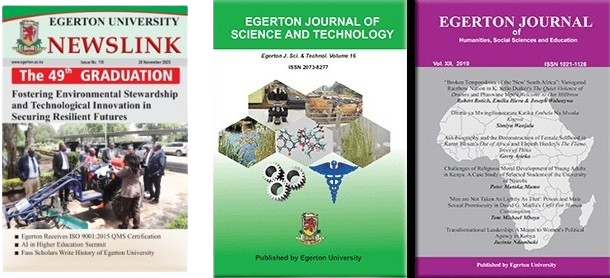
Egerton University NewsLink Magazine & Journals
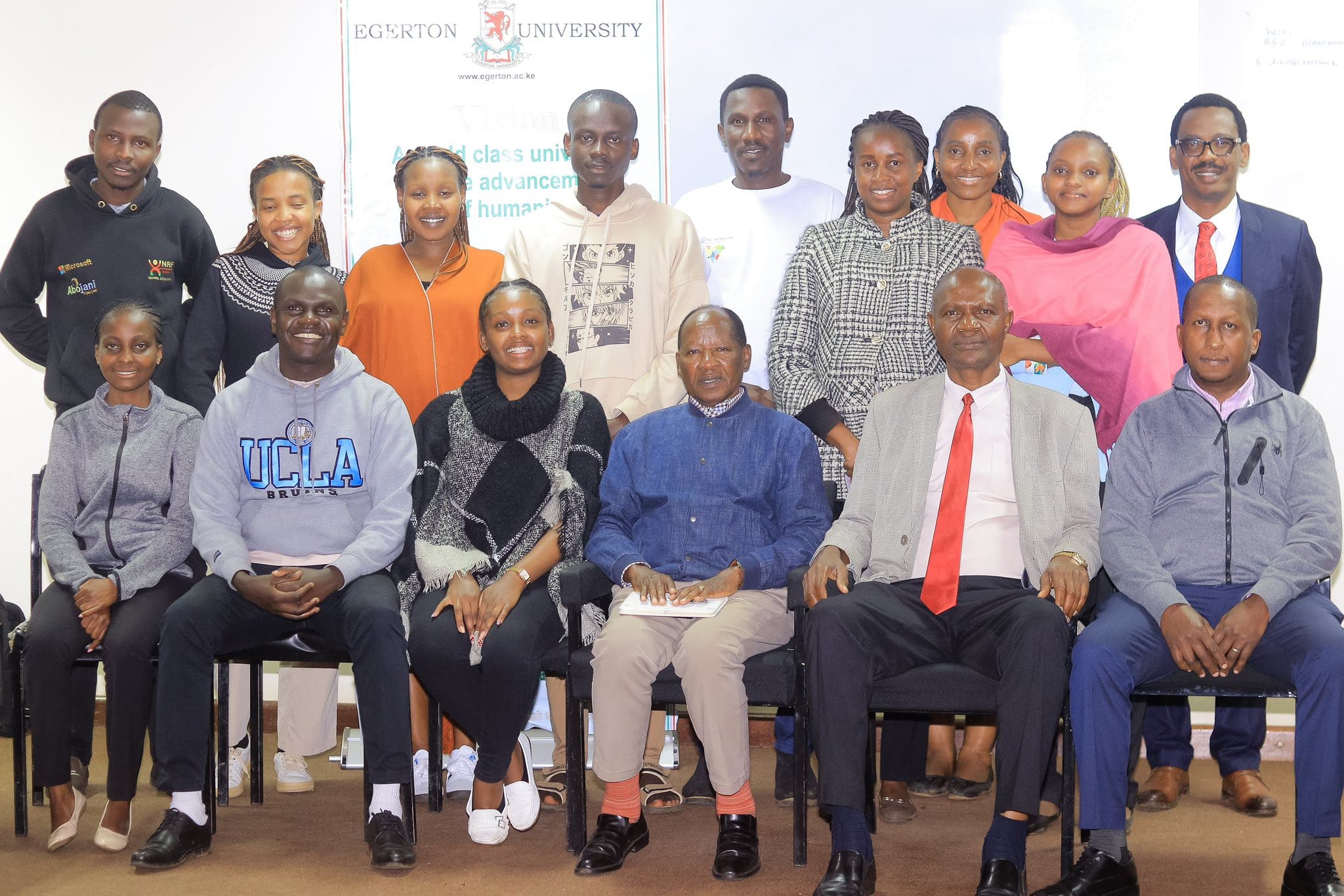
Egerton University, Nakuru – July 10, 2025 Egerton University, in collaboration with the National Research Fund (NRF) and the Nakuru County Festival Committee, held a strategic meeting yesterday to launch Phase One of preparations for the Kenya National Research Festival.
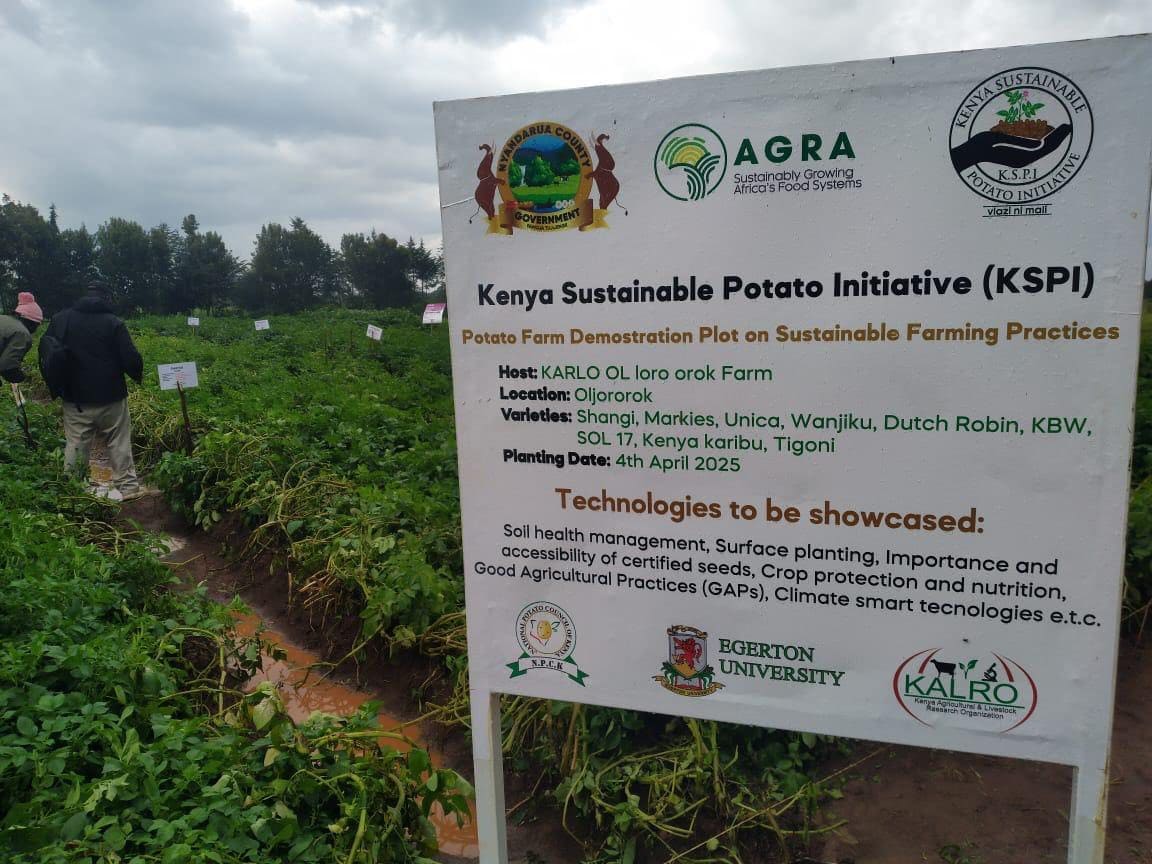
Egerton University has taken a major step forward in promoting sustainable agriculture, with over 300 farmers from Nyandarua and Laikipia Counties trained on Climate Smart Agriculture (CSA) practices.
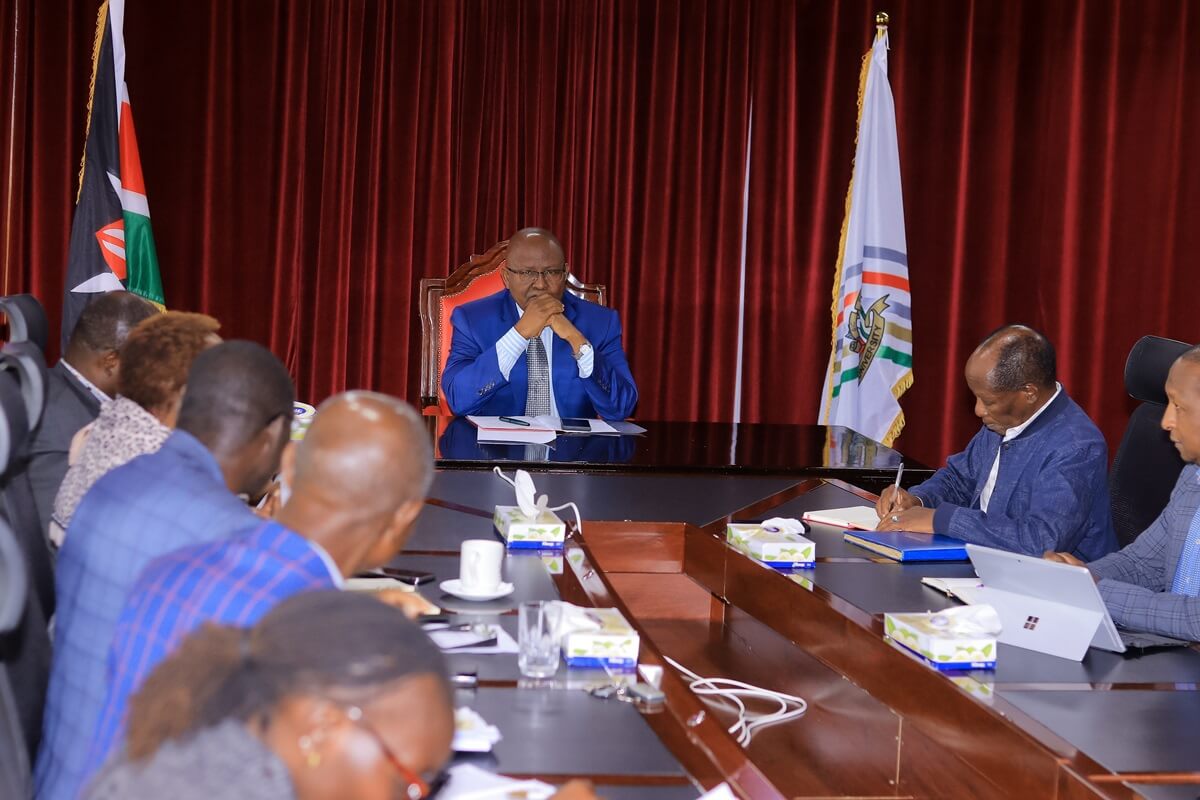
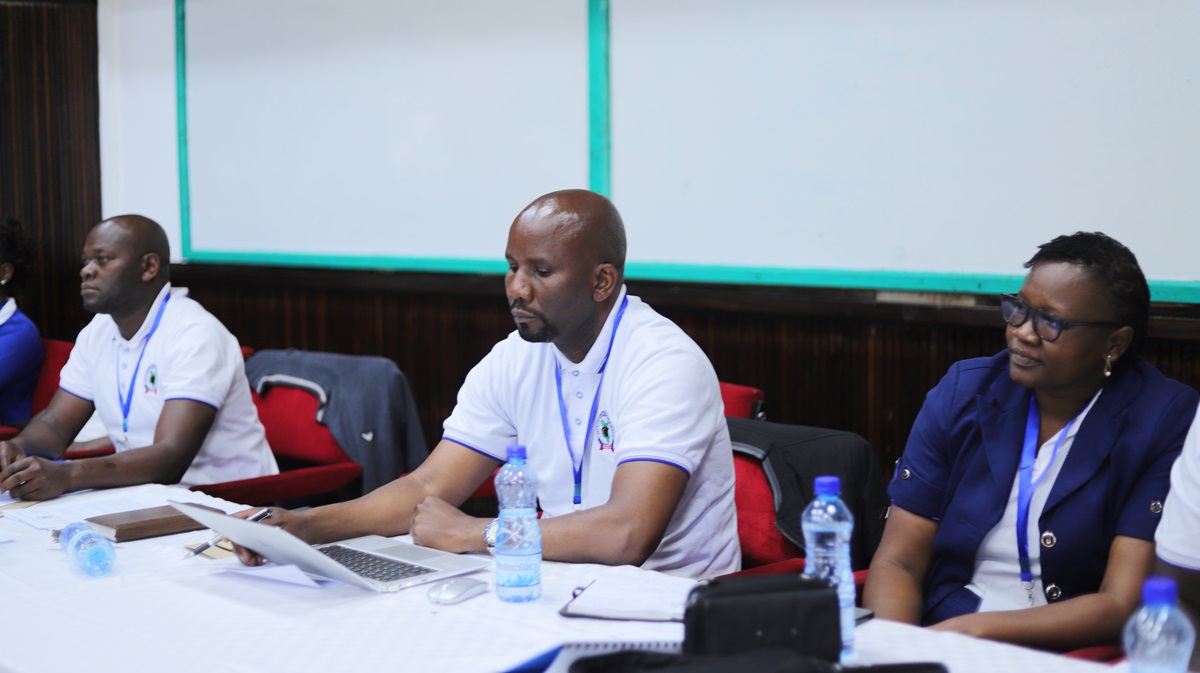
Egerton University Vice Chancellor, Prof. Isaac Kibwage, yesterday chaired a high-level meeting with the National Organising Committee of the Kenya National Research Fund (NRF) Festival in the University Boardroom.
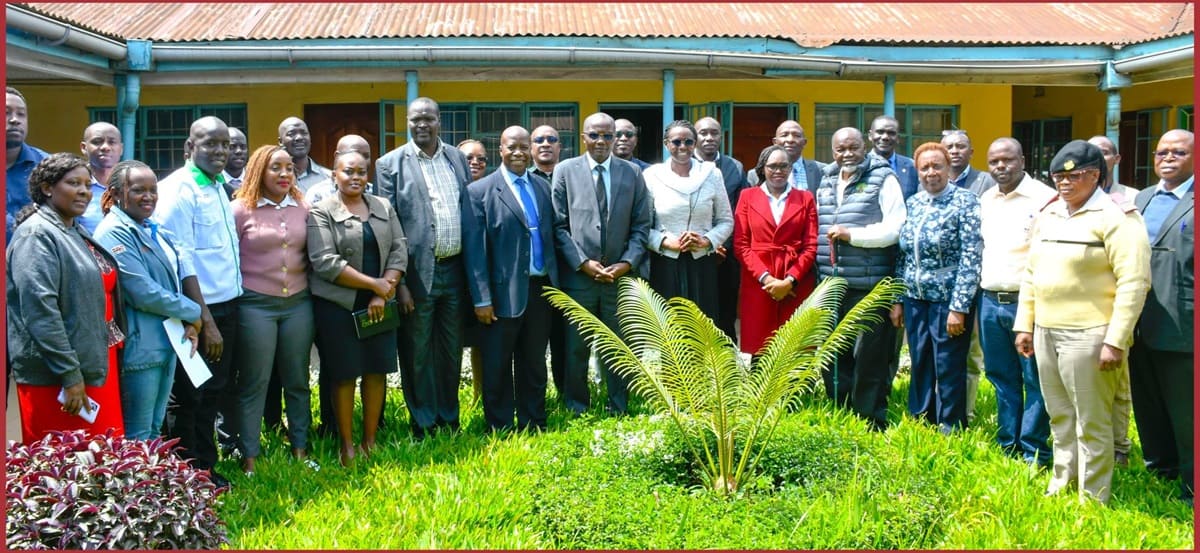
Egerton University continues to lead in environmental conservation. The University is now a key player in the rollout of the Mau Forest Complex Integrated Conservation Program.
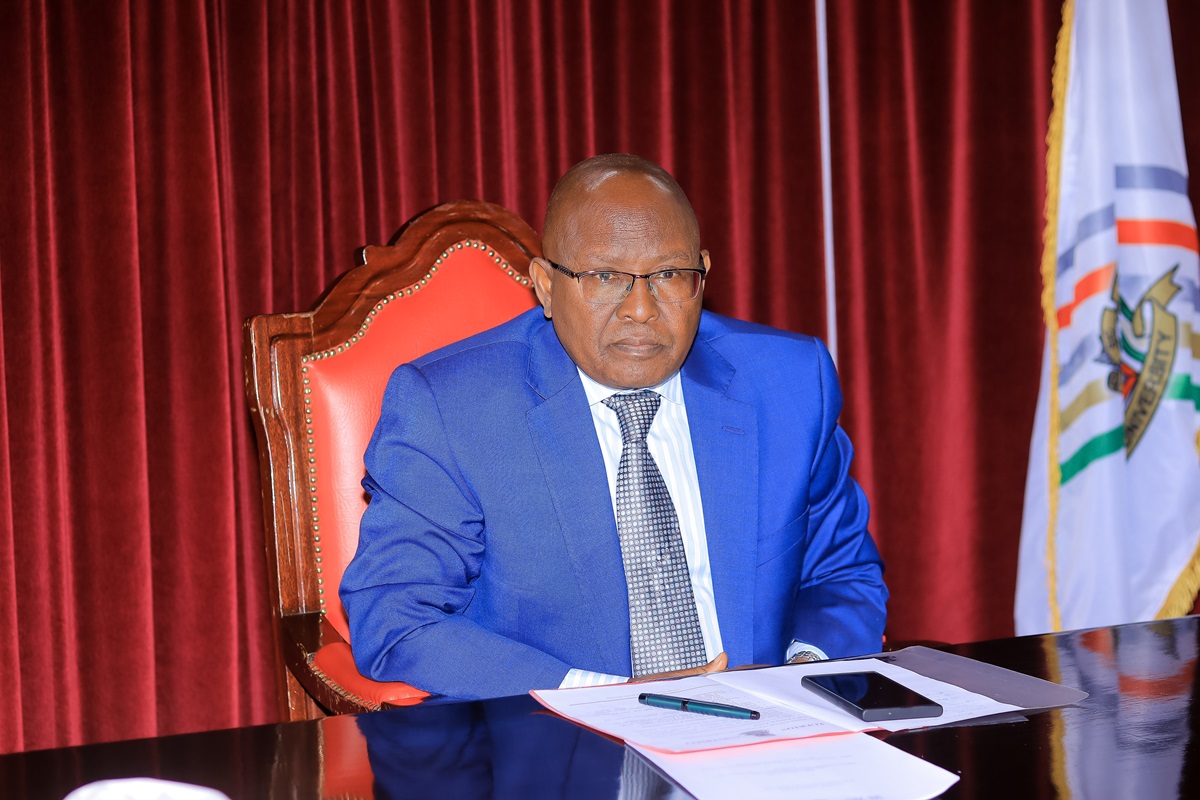
Kenya National Bureau of Statistics (KNBS) has today, 15th July, 2025 commenced ISO 9001:2015 Stage 2 Certification Audit, at Egerton University, Njoro Campus marking a significant milestone in checking the effectiveness of Quality management Systems at the Institution.
Egerton University wishes to inform the 2024 KCSE candidates who have been placed by the Kenya Universities and Colleges Central Placement (KUCCPS) IN other institutions but wish to transfer to fill vacancies in the following programmes:
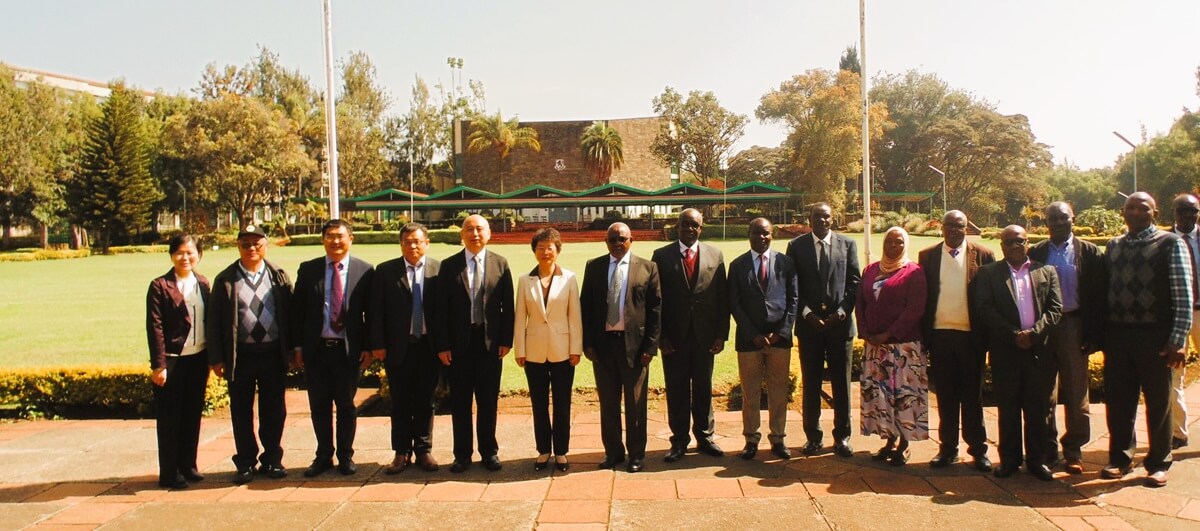

Egerton University Vice Chancellor, Prof. Isaac Kibwage, yesterday chaired a high-level meeting with the National Organising Committee of the Kenya National Research Fund (NRF) Festival in the University Boardroom.

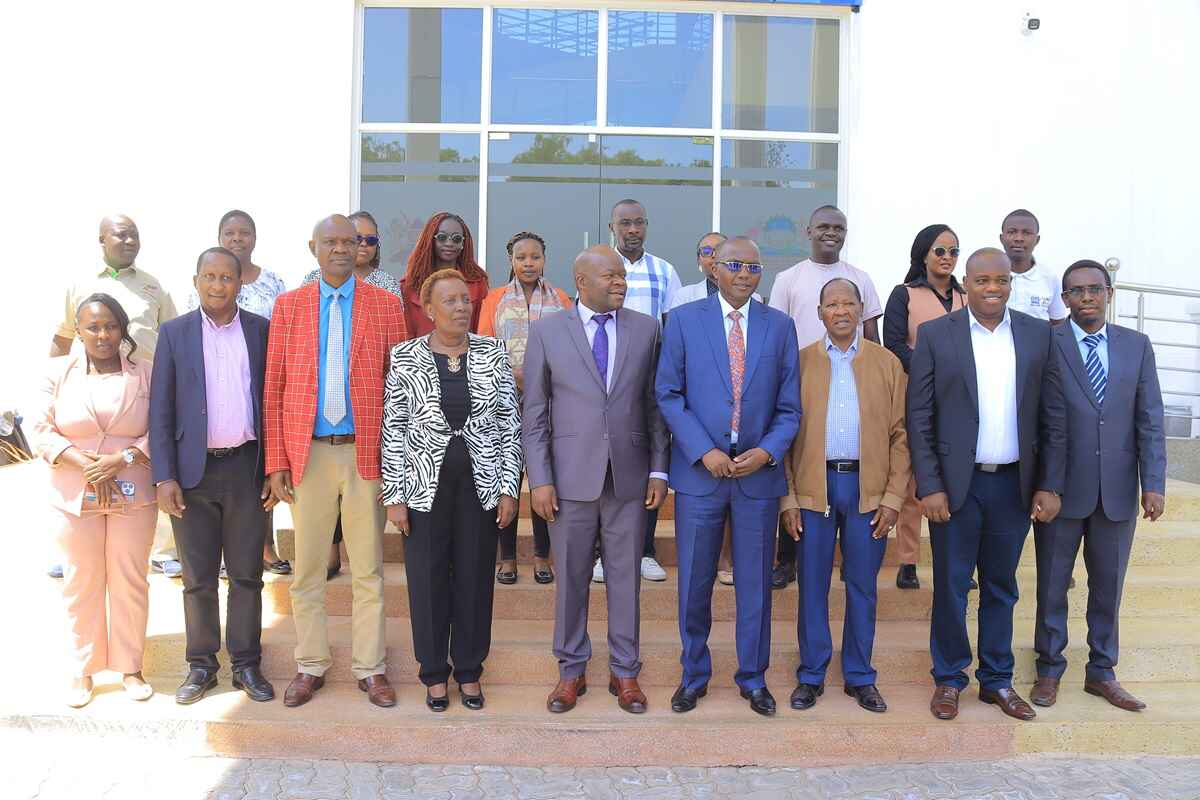
Preparations for the upcoming National Research Festival 2025 gained momentum as senior officials from the National Research Fund (NRF), Egerton University, and the National Organising Committee paid a courtesy visit to the Office of the Governor, Nakuru County.
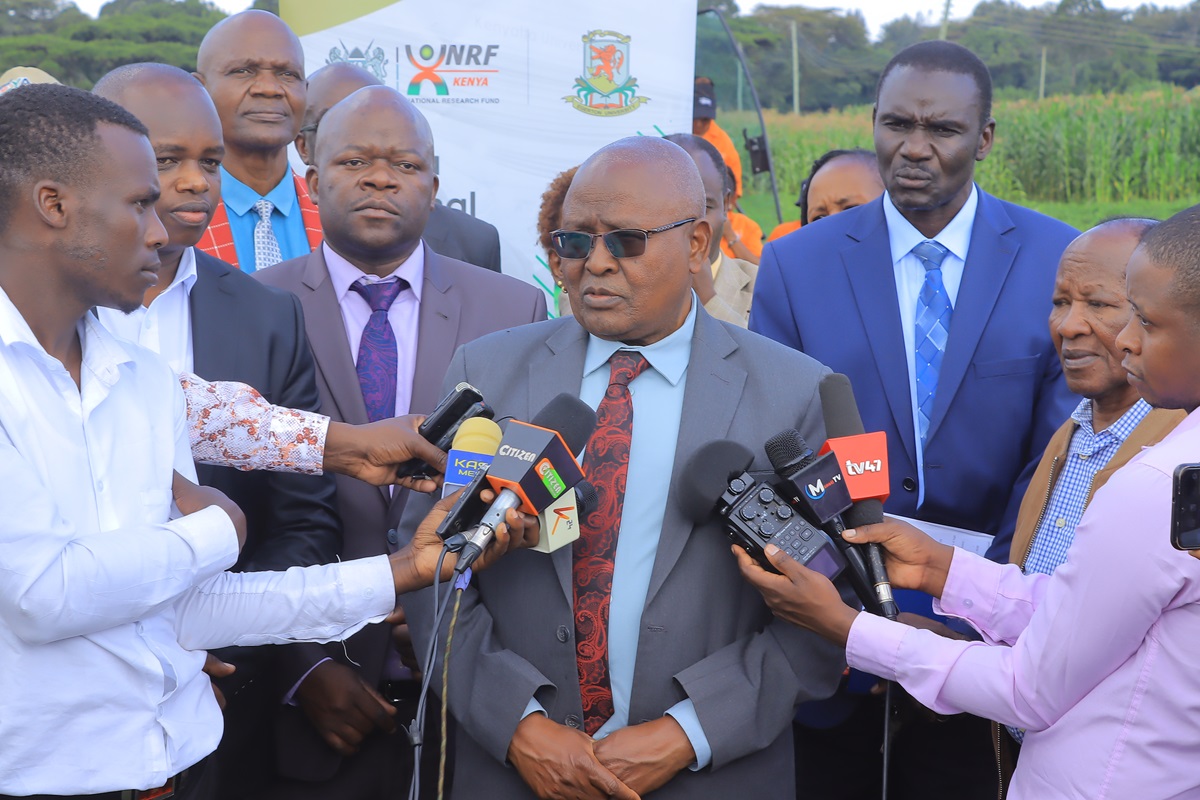
Egerton University, the National Research Fund (NRF), and the Nakuru County Government have jointly affirmed their readiness to host the National Research Festival 2025, which will take place from August 18 to 22 at Egerton University’s Njoro Main Campus.
Egerton University recently hosted the Alliance for African Partnership (AAP) partners engagement forum, an event that brought together experts from various African and international institutions to address pressing environmental issues and the role of research in policy formulation.
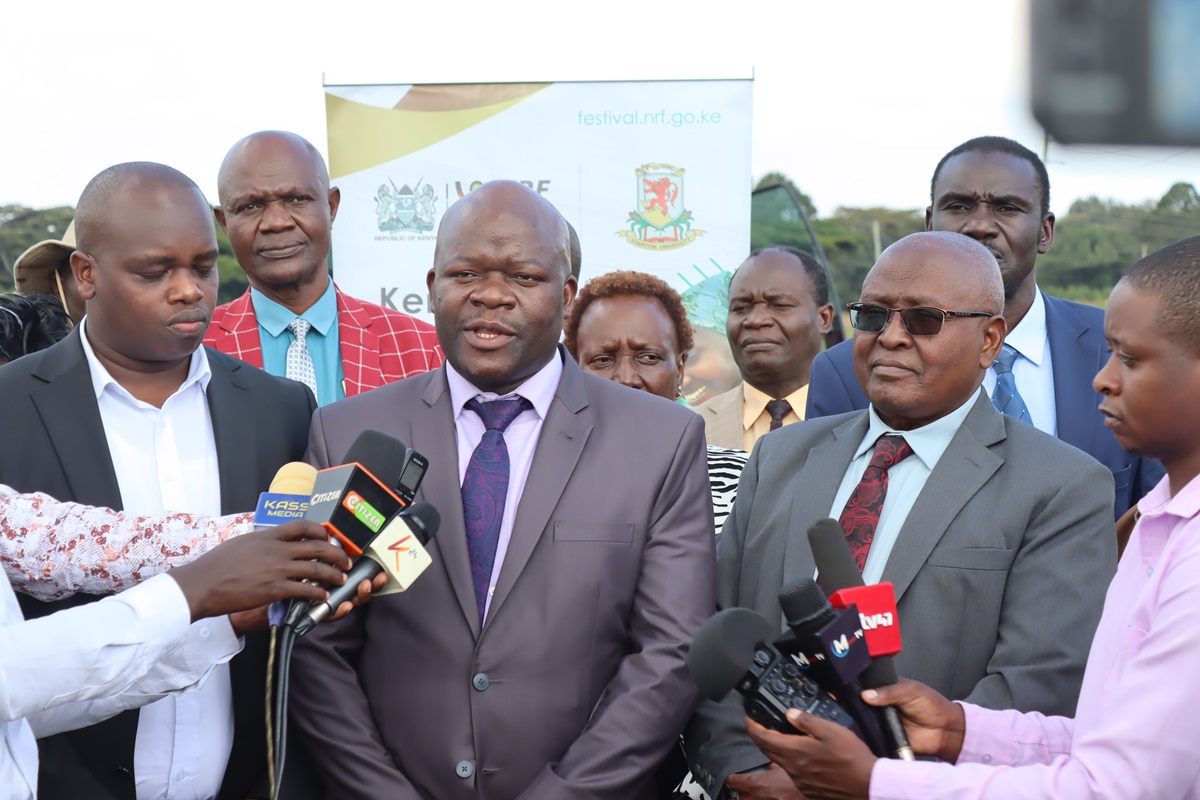
Egerton University is set to host the prestigious National Research Fund (NRF) Conference from August 18th to 22nd, 2025. The event is expected to draw researchers, farmers, students, and key stakeholders from across the country, focusing on innovations in agriculture and related sectors.
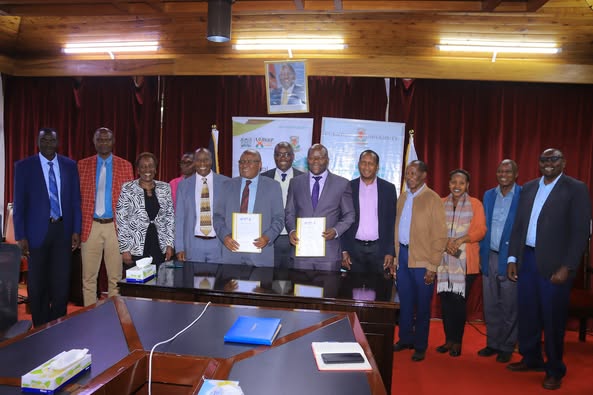
Egerton University and the National Research Fund (NRF) have signed a Memorandum of Understanding (MOU) for the Kenya National Research Festival 2025. The MOU was signed by Egerton Vice Chancellor, Prof. Isaac Kibwage, and NRF Chief Executive Officer, Dr. Dickson Andala.
The signing took place at the Chancellor’s Boardroom, Egerton University. It followed a joint press briefing where both parties confirmed their readiness to host the national event.
The MOU has taken time to finalize. This was due to financial and logistical obligations that had to be clearly outlined and agreed upon by both institutions. These included shared responsibilities on accommodation, venues, publicity, and technical support.
Despite this, preparations have remained on course. The National Steering Committee and the Local Organising Committee have continued to meet and coordinate key activities.
The festival will take place from August 18–22, 2025, at Egerton University's Main Campus. It is expected to attract researchers, innovators, students, industry leaders, and policymakers.
Prof. Kibwage reaffirmed the university’s commitment to a successful event. Dr. Andala welcomed the partnership and praised the steady progress already made.
All systems are now in motion for a vibrant and impactful research festival.
By Kurian Musa| Communications Officer | Egerton, Nakuru County, August 1,2025

ASARECA(Association for Strengthening Agricultural Research in Eastern and Central Africa) invites stakeholders to a Farmer Field Day focused on the Potato Rooted Apical Cuttings Technology.
This data-driven approach is expected to enhance service delivery by ensuring that resources align with the ever changing demands of students, academic staff, as well as library staff and management”
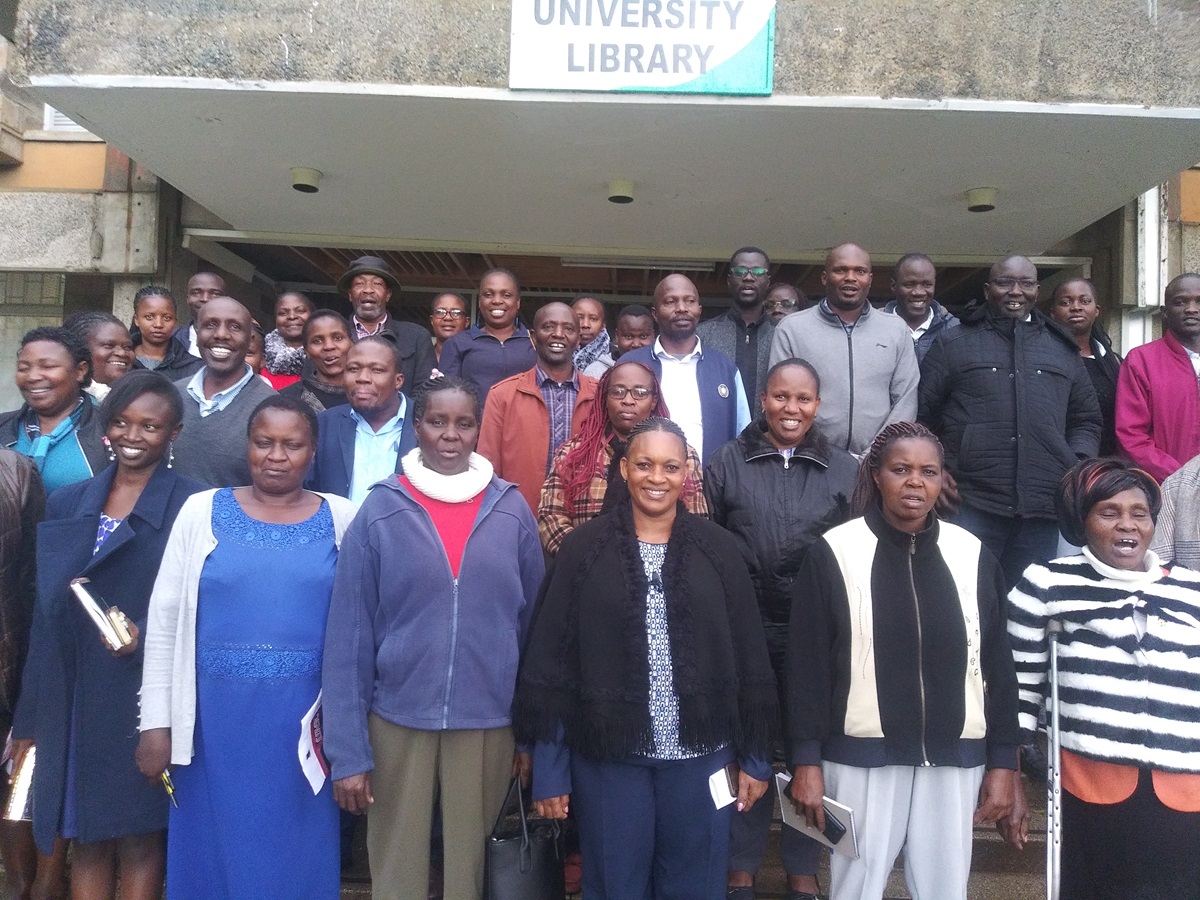
In a bid to modernise Library management and improve service delivery, the University Library recently rolled out a comprehensive training programme on the new Koha Library System. The training, which took place from June 17th to June 19th, 2025, targeted all Library staff to familiarise them with the new open-source platform. The move aims to replace the AMLIB system that had served the University Library operations for several years.
The training programme was organised and facilitated by the Library ICT Committee, which is headed by Mr. Kenneth Rotich. Mr.Rotich, together with a team of other librarians, led the sessions and provided practical demonstrations of the new Koha system’s functionalities.
“The Koha system is a robust, open-source platform that offers a high degree of customization. It is designed to accommodate a variety of library needs, from resource management to client services, and it will enable the Library to provide a more responsive and efficient library experience,” explained Mr.Rotich.
The training covered several modules of the Koha system, each addressing key areas of library operations. Staff were introduced to the system’s administrative functions, including the configuration and management of user access and system settings. Additionally, the course provided an in-depth training on cataloguing and classification of reading materials, an essential aspect of managing the library’s extensive collection of books, journals, and digital resources.
Participants also explored the Online Public Access Catalogue (OPAC), a crucial feature of Koha that enables users to easily search and access both physical and digital library resources. “This feature allows library clients to identify and retrieve information materials remotely, making it an essential tool in enhancing user convenience,” noted Mr. Andrew Njuguna a systems librarian and the In-charge Faculty of Law Library.
Other key features of the Koha system covered in the training included acquisition and management of information resources, the handling of serials (e.g., journals and periodicals), and the preparation and management of client data. The system’s integrated approach to resource management is expected to improve the library’s ability to handle large volumes of data while ensuring accuracy and efficiency.
The Koha platform allows for improved tracking of library usage patterns, helping staff gain a better understanding of users’ needs and preferences. “This data-driven approach is expected to enhance service delivery by ensuring that resources align with the ever changing demands of students, academic staff, as well as library staff and management,’’ said Mr. Steve Okech,one of the trainers.
In her closing remarks after the fruitful training, the University Librarian Mrs Janegrace Kinyanjui acknowledged that while the transition to a new system comes with challenges, the long-term benefits outweigh the initial learning curve. She encouraged the library staff to be proactive in mastering the system while highlighting the importance of ongoing training and knowledge sharing.
“The Division of Digital Library Services will continue to support the staff as they transition to the new system. Regular follow-up training sessions and troubleshooting support will be available to ensure a smooth implementation of Koha across the University’s library network,” She said.
Koha is among the world's most widely used open-source Integrated Library Systems (ILS). It dates back to 1999 in New Zealand where it was developed by a library based consortium called the Horowhenua Library Trust. The library was in need of a system to manage its resources and embarked on a journey to build its own software, which would eventually become Koha. The web based library system provides affordable, customizable, and scalable solutions for libraries, particularly in the context of rising costs of acquiring and maintaining information systems.
Koha is sustained by the Koha Community, a worldwide group of library professionals, systems developers, and organizations. As an online software, the system fosters interactivity among users, enabling continued adjustments to meet the evolving needs of libraries. The name Koha is derived from an aboriginal New Zealand language and means to gift or give back to the community.