


By Kurian Musa
December 17, 2025
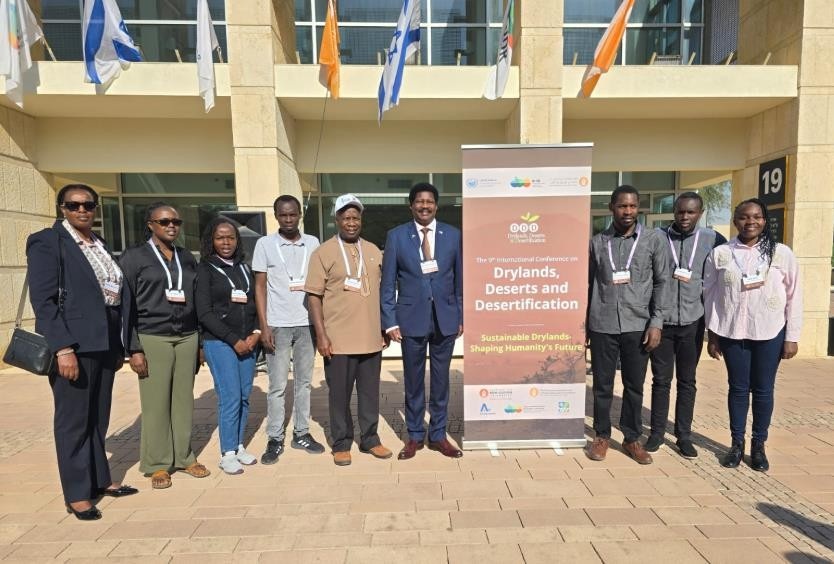
Egerton University took part in the November 30 to 4 December 2025 International Conference on Drylands, Deserts and Desertification (DDD). The conference was held at Ben-Gurion University of the Negev in Israel.
Held under the theme “Sustainable Drylands – Shaping Humanity’s Future,” the theme spoke directly to global challenges facing dryland regions. These challenges include climate change, water scarcity, food insecurity, and land degradation.
The conference brought together scientists, policymakers, development practitioners, and academics. Participants came from different regions of the world. They shared research, experiences, and policy ideas on dryland management.
The five-day programme was intensive. It included high-level scientific sessions.The convention featured technical workshops, policy dialogues and Students showcasing their work through poster presentations. Other participants also took part in guided field tours in the Negev desert.
Several key themes guided the discussions. These included earth observation and biodiversity. Other key topics focused on ecosystem services and economics, Food and nutrition security featuring strongly, Water resources, hydrology, and human health strongly taking centre stage of the discussions.
These at the 2025 Isarel conference themes closely align with Kenya’s national priorities. They directly speak to the development of Arid and Semi-Arid Lands (ASALs). ASALs cover more than 80 per cent of Kenya’s land area. The themes speak to salient government policies in support of pastoralism, agriculture, and millions of livelihoods.
Kenya was formally represented by H.E. Albert Kendagor, the Ambassador of the Republic of Kenya to Israel. He addressed the conference and the Kenyan academic community.The Ambassador emphasized academic exchange.
The Kenyan envoy noted its importance in strengthening agriculture and environmental management. He highlighted the long-standing cooperation between Kenya and Israel.
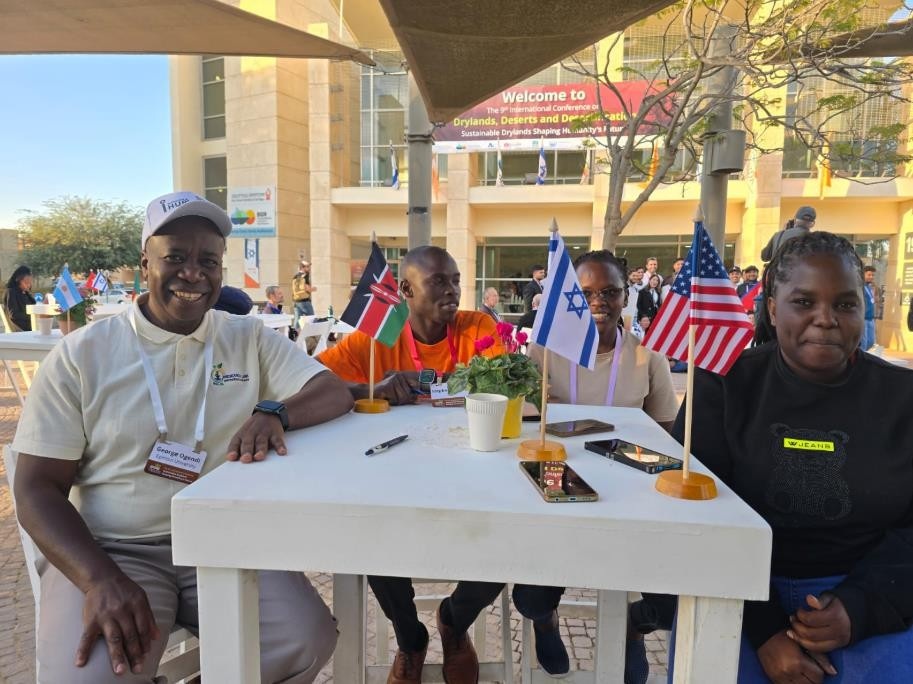
Amb. Kendagor observed that Kenyan students in Israel benefit from advanced training. “They gain exposure to modern research and innovation. They also learn from practical agricultural technologies suited for drylands.” He stressed the need to bring these skills back home, noting that returning scholars establish demonstration farms.
It emerged that scholars who go out of the country should come back home to promote modern farming practices and also work directly with farmers.These efforts support Kenya’s food security agenda.
Ambassador Kendagor stressed that the support of climate resilient crops and innovation in the agricultural space is key. His remarks echoed national policies under Vision 2030 and the ASAL Policy.
Egerton University was officially represented by Prof. George Ogendi, from the Department of Environmental Science. Actively participating throughout the conference, Prof. Ogendi delivered two scientific presentations, both focusing on real challenges facing Kenya’s drylands. They combined science, policy, and community experience.
The first presentation focused on gender and development. It drew lessons from women in Lake Bogoria agropastoralist communities. It highlighted the role of women in pastoral livelihoods. It also emphasized inclusive development approaches.
Prof Ogendi’s presentation aligned with government efforts to empower women in ASALs. It supported policies that promote equitable access to resources, reinforcinf the need for community-driven development.
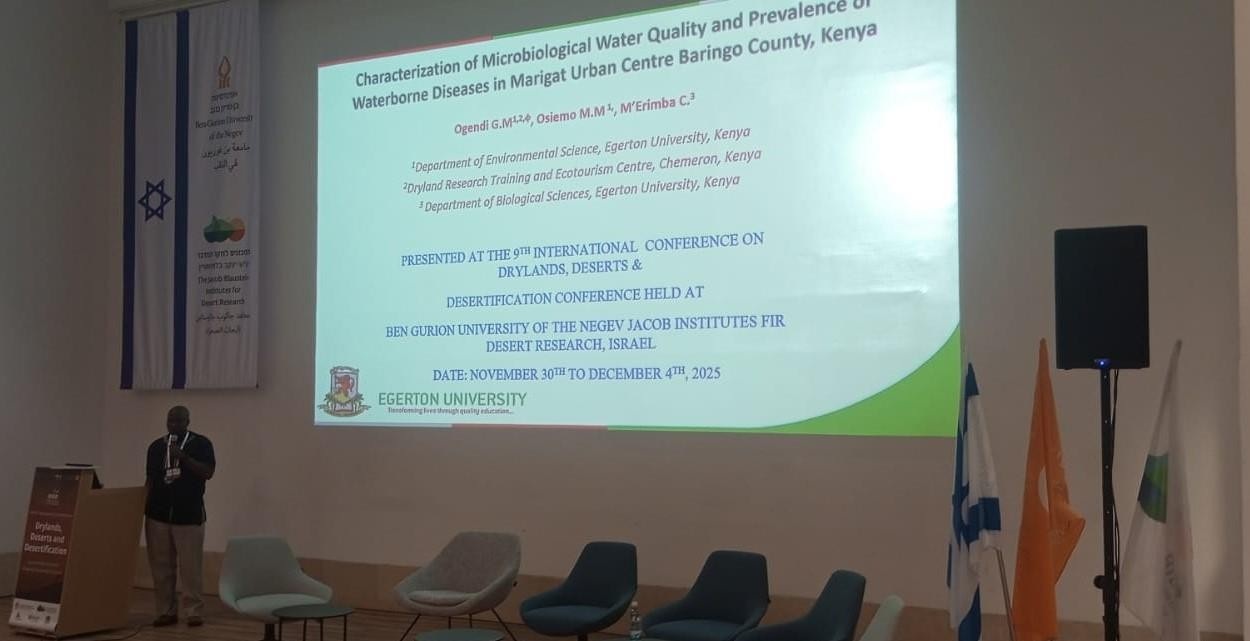
The second presentation by professor Ogendi addressed water quality and health. It focused on microbiological water quality in ASAL regions. He examined the prevalence of waterborne diseases.
“This research directly supports national public health strategies and it aligns with policies on clean water and sanitation. It also supports disease prevention in marginal areas,” said Prof Ogendi in a report.
He went on to report that, “ The findings are important for pastoralist communities, since many rely on unsafe water sources, yet waterborne diseases remain a major challenge.”
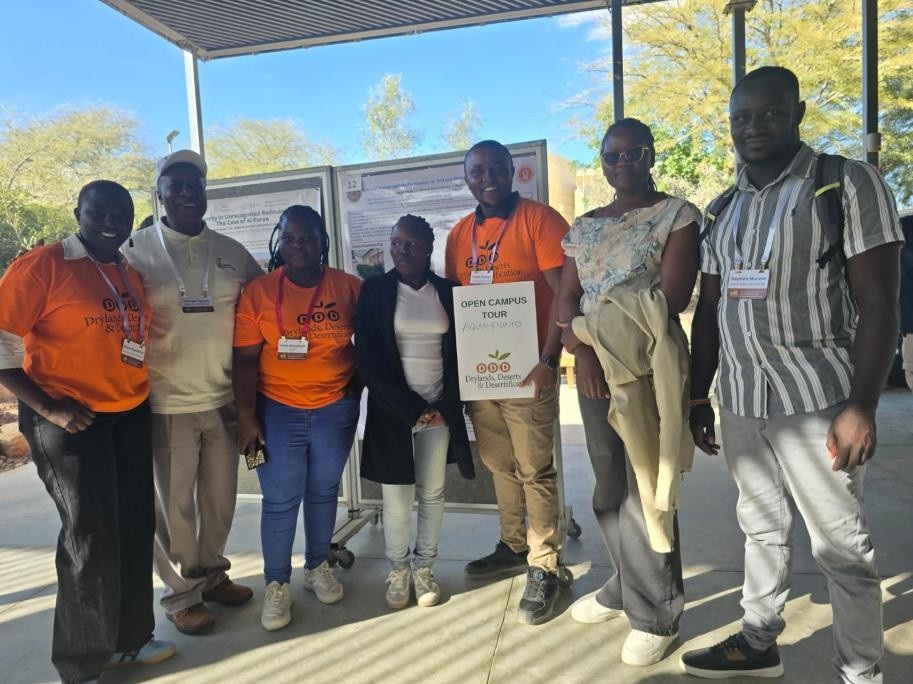
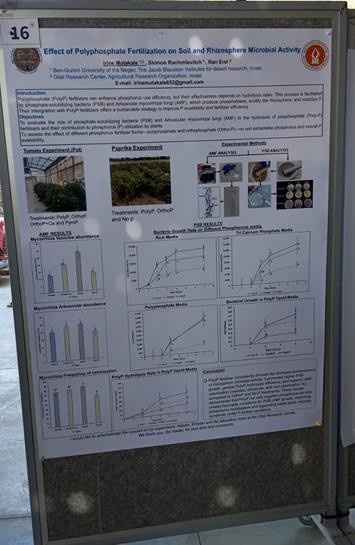
Several Egerton University graduates are currently studying and conducting research in Israel. Their participation in the conference, through poster presentations, significantly strengthened Egerton University’s presence.
The alumni showcased research focused on dryland agriculture and climate adaptation, highlighting Kenya’s strong contribution to global scientific discourse. Their work also enhanced Egerton University’s visibility and reputation on the international research stage.
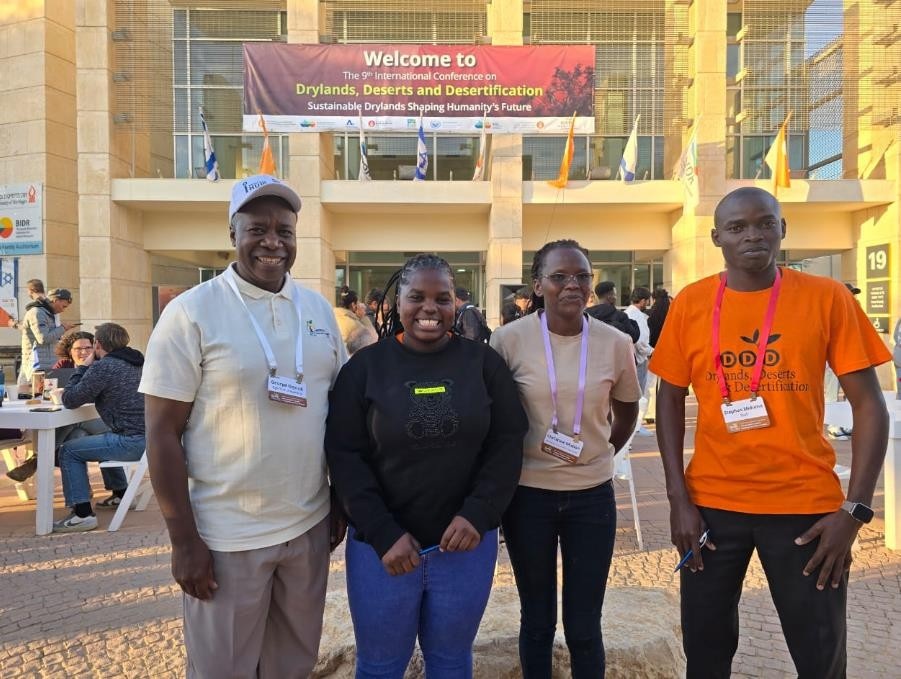
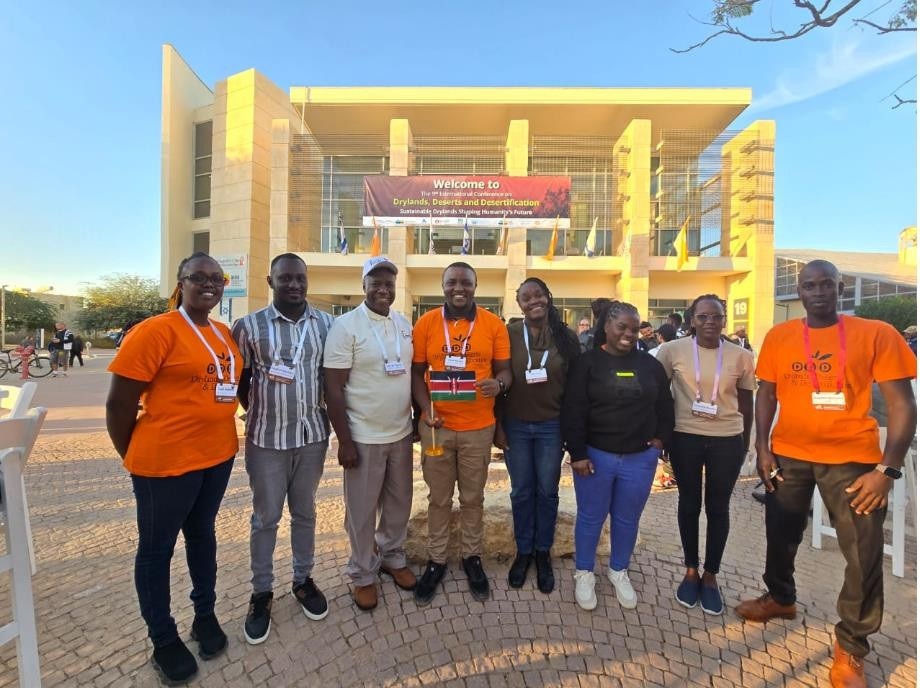
Prof. Ogendi, currently the Ag. Principal Nakuru City Campus College, met additional Egerton alumni at Ben-Gurion University. “These alumni are engaged in cutting-edge research. Their work addresses drought, heat stress, and sustainable food systems.” The Egerton delegation held an interactive session. Alumni, students, and Prof. Ogendi interacted and documented the moment through group photographs.
One of the Alumni presentation was by Patrick Mdemba, a PhD student. His research examines plant–soil interactions in Opuntia ficus-indica. He focuses on drought and optimal growth conditions. Another is Leah Waweru is an MSc student. She studies irrigation regimes in almond production. Her work supports efficient water use in drylands.
While Stella Kendi is researching Red Pitaya, an emerging fruit crop with unique nutritional and health benefits, Mitchel Adhiambo is an MSc graduate from Egerton who studied heat stress in potato varieties. She is now pursuing a PhD at the Volcani Research Institute.
Another Alumni Stephen Midumba an MSc student, whose research focuses on sweet potato response to drought. He studies nitrogen application and carbon allocation.
Prof Ogendi also interacted with Christine Mutiso who is studying pollination under heat stress. Her work examines bumblebee efficiency in tomato production. This research is critical for food security under climate change.
The conference outcomes were clear. Egerton University’s research capacity was clearly demonstrated on a global pedestal, thus gaining strong international visibility. Egerton alumni received recognition for their excellence. Their work enhances the University’s global reputation. It also reflects Kenya’s growing research footprint.
Prof. Ogendi also established valuable research networks.These networks focus on dryland agriculture and water resources. They also address climate adaptation strategies.Through the conference, also opened doors for partnerships.
“Opportunities exist for joint research projects. Student and staff exchange programmes were discussed. Co-supervision of graduate students is possible. Collaborative grant applications are also a key opportunity,” explained Ogendi.
Participants were exposed to emerging global research trends. These included climate-smart agriculture. They also included sustainable land and water management. Advanced earth observation tools featured strongly. Dryland biodiversity conservation was emphasized. These areas are critical for ASAL transformation.
Kenyan students at BGU come from several universities. These include Egerton, JKUAT, UON, and Karatina University. They are engaged in impactful research. Their work spans pest control and plant physiology. It also covers soil–water management and climate resilience.
“The group was joined by Zaneta, an Indian student. She has embraced Kenyan culture. She has even learned Swahili,” explained Prof Ogendi.
Her engagement reflected inclusivity and multiculturalism. It highlighted the welcoming environment at BGU. It also showed the power of academic exchange.