


Esteemed guests, the Egerton community, neighbours of the University, ladies as gentlemen!
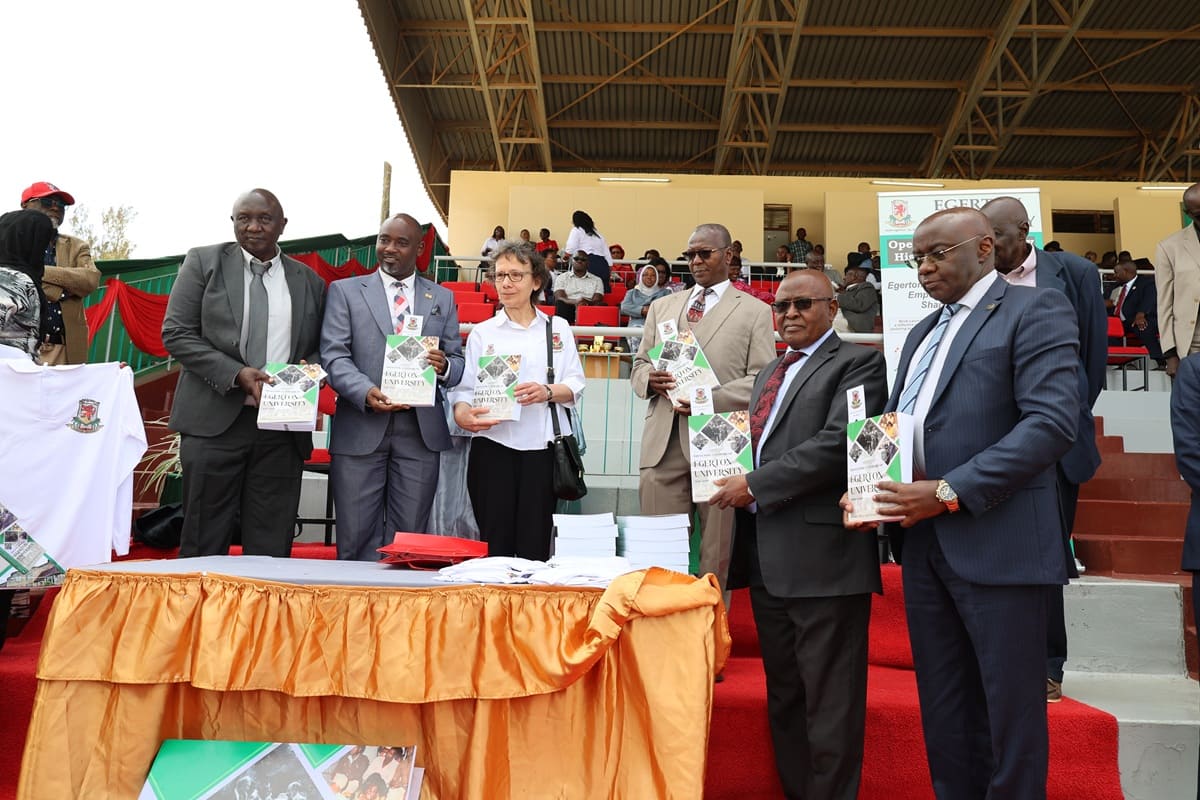
It is a privilege and honour to stand before you and comment on the book we are about to launch, Thus Until: A History of Egerton University, 1939–2019.
Marcus Cicero, an intellectual of the ancient Roman world, called history magistra vitae or teacher of life. Indeed, an important aspect of historical awareness is that human beings draw lessons from past experience for navigating the present and the future. Among other things, the book we are launching today is an important reference point for Egerton’s institutional memory. The book is not only comprehensive in relation to Egertonians’ collective experience but also inspirational, entertaining and engaging.
The institutional memory that the book tries to summarise from a big mass of information puts Egerton at the centre of Kenyan, African and global developments since the establishment of the institution in 1939. The book is therefore useful not just to the current and future generations of Egertonians, but also the broader society. It generally emphasizes the role Egerton has played in human development, especially in the field of agricultural education and training.
Comprehensive as the book is in covering the various aspects of the institution’s history, it is mainly a foundation upon which research on specific strands of the Egerton story can be built. Postgraduate students, for example, can research on the histories of campuses, institutes and faculties as well as the biographies of eminent personalities like former Principals, Chairs of Boards of Governors, Vice-Chancellors and Chancellors. Alumni and members of staff writing their autobiographies can also share their Egerton experiences. This has already been done in books by James Butt [My Life and Times], William Omamo [Path to Kaliech] and Prof. Njenga Munene [Rooted in Hope]. Butt was in the first multiracial class of 1961, while Omamo was the first African Principal of Egerton College. Munene, who is now the Vice-Chancellor of Zetech University was a Deputy Vice-Chancellor in Egerton in the 2010s. Each of these former Egertonians have devoted at least a chapter on their experiences at Egerton in their autobiographies, which has expanded the institution’s memory.
Allow me to end these remarks by acknowledging the encouragement we received from supporters of what came to be known as the “book project”. Prof. Alfred Kibor, who was the Director for Research for most of the project life once referred to Prof. Ilieva and I as “people of the book”, which I considered a morale booster. Whenever I met Mzee Zablon Ong’ori, a former employee of the University who was among our first mobilisers of informants for the project, he would ask me when the book we promised to write from data we were collecting from interviews would be launched. We thank God that the moment Mzee Zablon looked forward to is here.
I thank you all.