


By Kurian Musa
NJORO, Kenya — Egerton University has reinforced its position as a regional hub for agricultural research and scientific collaboration by hosting international partners under the GENES II Programme, an initiative supported by the European Union that seeks to strengthen plant breeding, research capacity, and food security systems across Africa.
The delegation was received by the Deputy Vice-Chancellor for Administration, Finance and Planning, Prof George Muthaa, who welcomed the guests on behalf of the Vice Chancellor Prof Isaac Kibwage to the university and reaffirmed Egerton’s commitment to partnerships that address the continent’s agricultural and development challenges.
“The Vice Chancellor is officially away. I am welcoming you on his behalf so that we can discuss and take this conversation forward,” he made opening remarks, setting the tone and pace for the discussions. 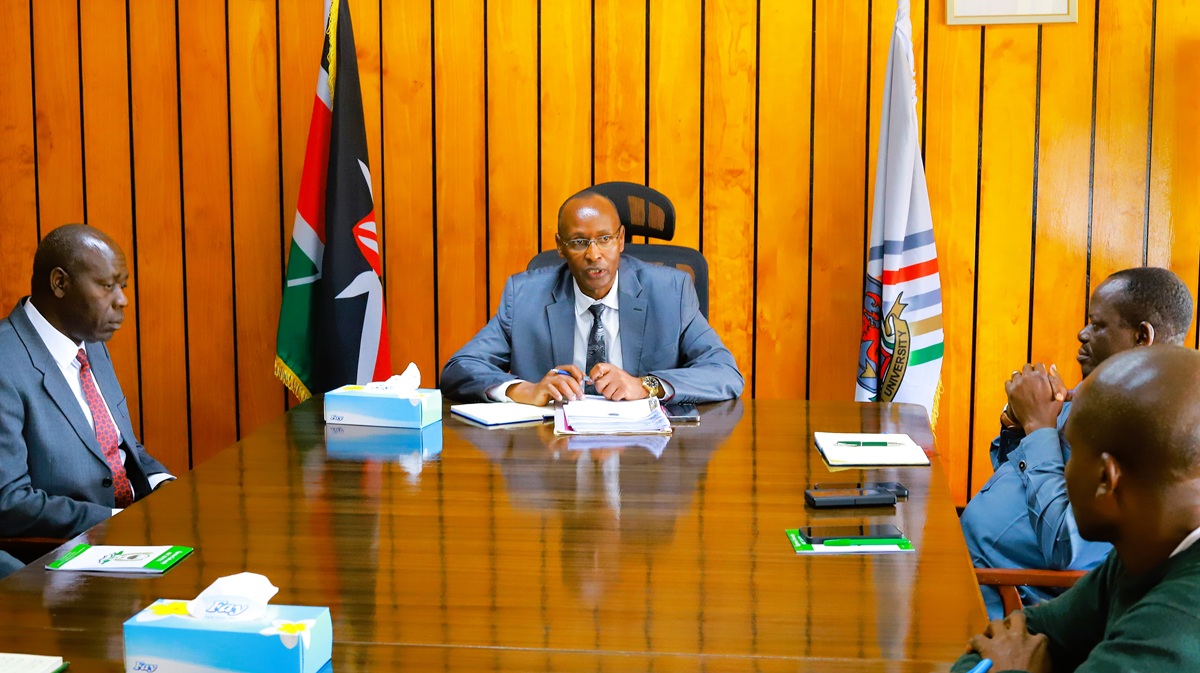
Egerton University Deputy Vice-Chancellor for Administration, Finance and Planning, Prof George Muthaa, welcomes international delegates attending the GENES II Programme meeting at the university in Njoro. (Photo: Kurian Musa/ Egerton)
The meeting brought together researchers, plant breeders, and representatives of partner institutions involved in the GENES II Programme, which builds on the achievements of the earlier GENE I initiative and focuses on enhancing scientific capacity, institutional collaboration, and agricultural innovation across African universities and research organizations.
Speaking on behalf of the Programme Coordinator, a representative conveyed the coordinator’s apologies for not attending the meeting in person, explaining that official commitments had prevented her from travelling.
The representative said the programme was established to address the interrelated challenges of population growth, agricultural productivity, and food security in Africa, noting that the initiative has consistently focused on strengthening plant breeding systems and scientific collaboration.

Delegates participating in the GENES II Programme meeting follow presentations on plant breeding, agricultural innovation, and capacity building during the discussions at Egerton University. (Photo: Kurian Musa/ Egerton)
“From the very beginning, our work has focused on addressing the challenges associated with population growth and agricultural development across Africa. While significant progress has been made, managing population growth and ensuring food security remain major concerns for governments across the continent,” he said.
He highlighted the contribution of the African Plant Breeding Association, saying the association had played a critical role in establishing the institutional structures that continue to support plant breeding, research, and capacity development across participating countries.
The representative also acknowledged the leadership of a senior programme champion who was recently appointed Permanent Secretary in the Ministry of Education in his home country, a development that prevented his attendance at the meeting.
He said the programme partners were grateful that their collaborative efforts had enabled them to secure funding from the European Union, which has significantly strengthened research collaboration and institutional capacity across the network.
“This support has strengthened our commitment to advancing plant breeding, research, innovation, and capacity building across Africa, and we remain dedicated to ensuring that these initiatives deliver lasting impact for our farmers, institutions, and future generations,” he said.
Participants noted that the programme has already begun yielding measurable results through the training of researchers, strengthening of institutional partnerships, and development of collaborative research initiatives across African universities.
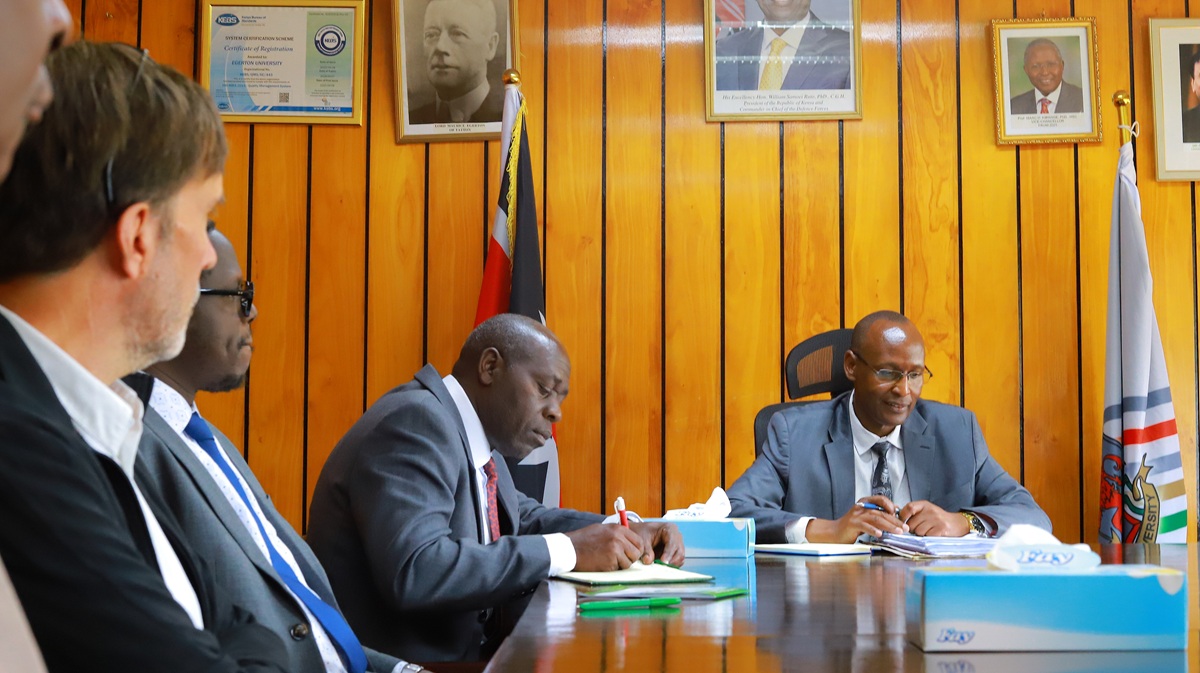
Researchers and institutional partners from African universities and research organizations engage in deliberations aimed at strengthening collaboration in plant breeding and food security under the European Union-supported GENES II Programme.(Photo: Kurian Musa/ Egerton)
The representative praised the progress achieved under GENE I, saying it had laid a strong foundation for the expanded ambitions of the GENES II Programme.
“We built a strong foundation in GENE I, and through that process we gained valuable experience as partners. Some partnerships worked exceptionally well, while others presented challenges, giving us an opportunity to understand what works within different institutions and national contexts,” he said.
He added that the exchange of knowledge, expertise, and best practices among partner institutions had become one of the programme’s greatest strengths, with several successful initiatives already demonstrating significant impact.
“I am already seeing the impact of this capacity-building programme, and that is truly encouraging,” he said, while urging continued collaboration to ensure that the programme delivers sustainable benefits for African agriculture.
The discussions also highlighted the importance of nurturing young scientists and strengthening postgraduate training in plant breeding and agricultural sciences.
The representative commended the Programme Coordinator for her leadership and dedication, saying her commitment had been instrumental in guiding the initiative despite her absence from the meeting.
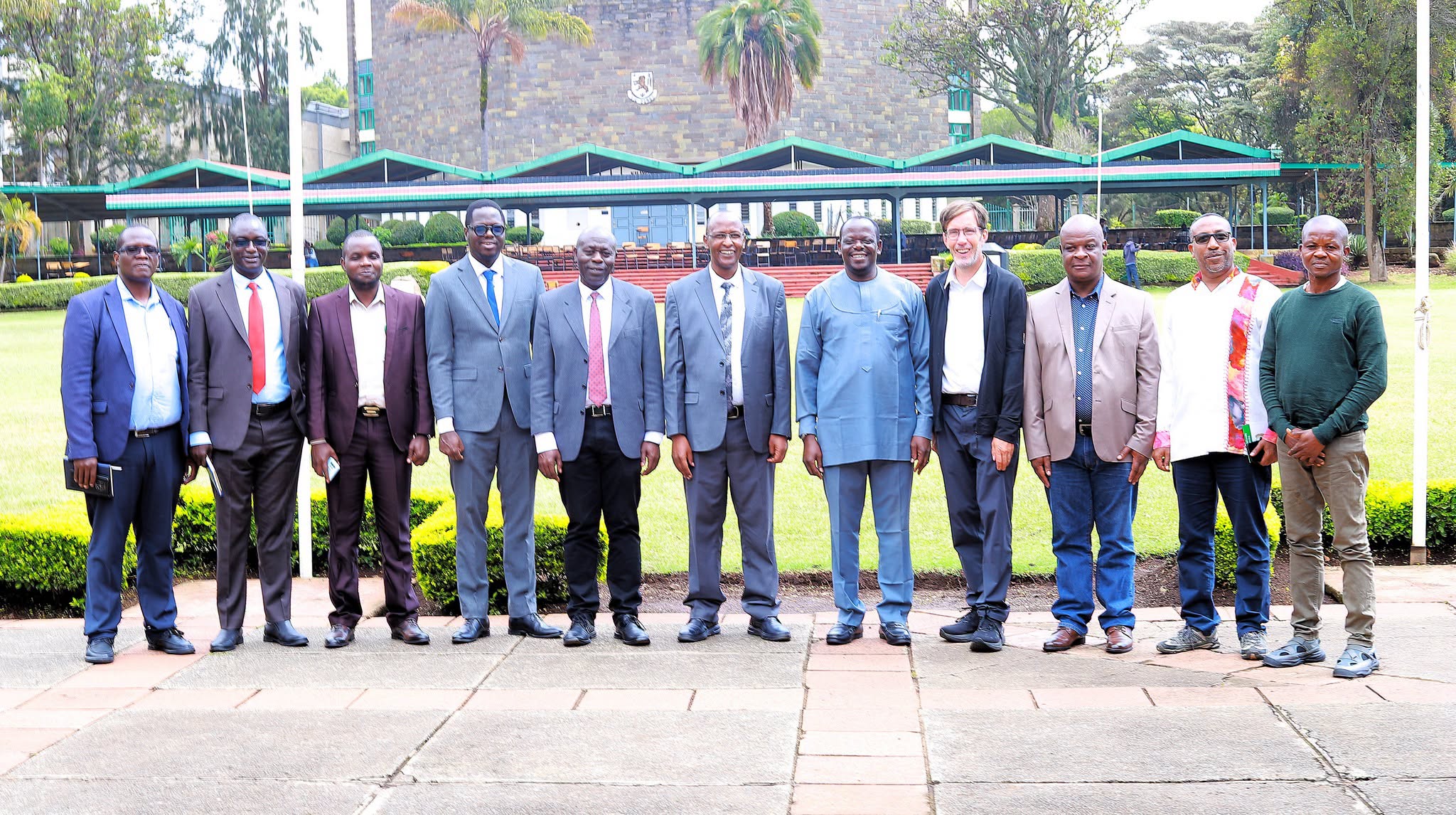
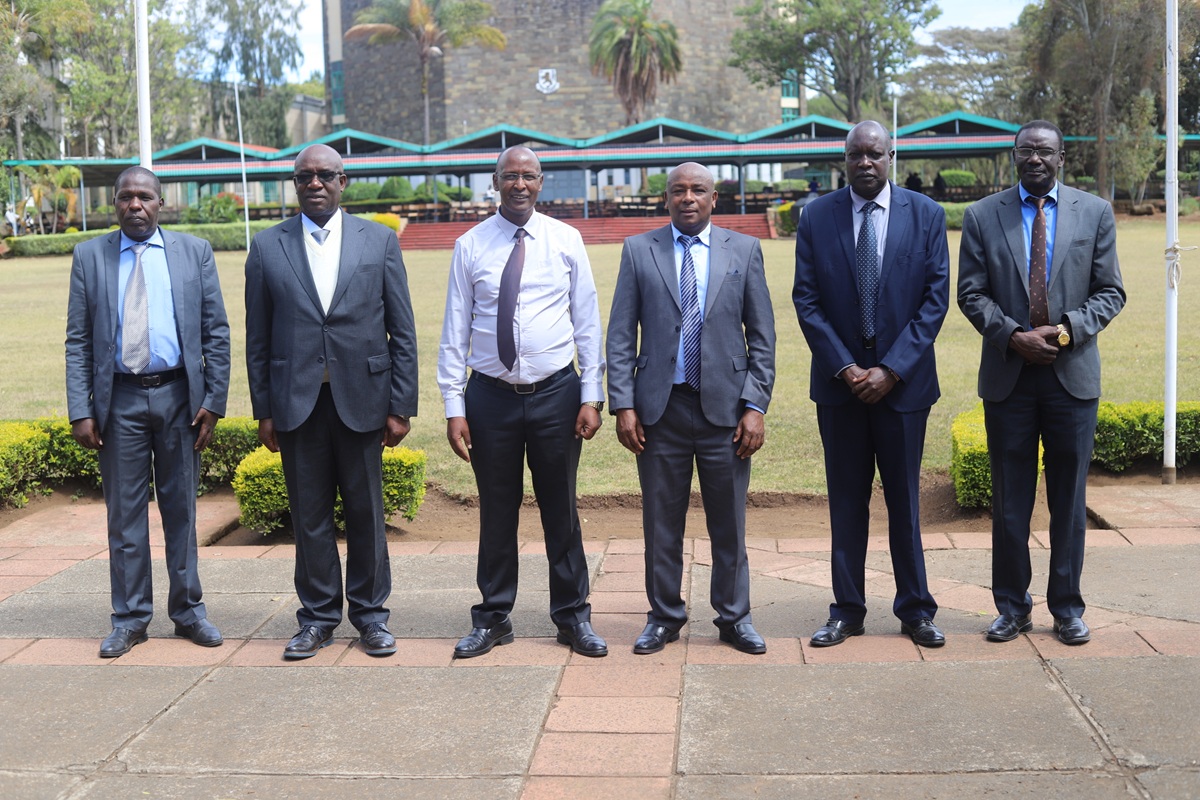
Prof George Muthaa (centre) poses for a group photo with GENES II Programme delegates after discussions on advancing research partnerships and agricultural development across Africa.(Photo: Kurian Musa/ Egerton)
Participants also expressed appreciation for Egerton University’s hospitality and its role in supporting scientific collaboration across the continent.
“We are very happy to be here. The progress we have seen is encouraging, and the environment for collaboration has been excellent. We sincerely thank Egerton University for hosting us,” he said.
The meeting underscored the importance of sustained partnerships in addressing Africa’s food security challenges through research-driven solutions. Delegates emphasized that strengthening plant breeding capacity is essential for developing improved crop varieties that can withstand climate change, emerging pests and diseases, and the growing demand for food.
For Egerton University, the meeting reinforced its expanding role in international agricultural research networks and its commitment to producing scientific solutions that contribute to sustainable agricultural development in Kenya and across Africa.
The courtesy call concluded with a renewed commitment by the partners to deepen collaboration in plant breeding, agricultural innovation, and scientific capacity building, with participants expressing confidence that the GENES II Programme will play a significant role in strengthening Africa’s food systems, research institutions, and agricultural resilience.
Writer is Communication Officer, Directorate of Communication and Marketing
Email: