


By Kurian Musa
When Josephine Ndambuki walked through the gates of Egerton University as a Computer Science student, she could hardly have known that the relationships, experiences and lessons she gained there would eventually take her into the centre of Kenya’s ambition to build a technology-driven economy.
Today, Ndambuki is the Chief Manager, Business Development and Innovation at Konza Technopolis Development Authority (KoTDA), where she is helping shape the investment, innovation and technology ecosystem of what Kenya envisions as the Silicon Savannah. With more than 16 years of experience spanning the ICT and telecommunications sectors, she has worked across private, public and development organisations and participated in some of Kenya’s significant digital infrastructure initiatives.Her journey was at the heart of the Egerton University Alumni Connect webinar, which brought the Class of 2007 alumna back into conversation with students and fellow graduates. The session offered more than a recollection of university life. It became a practical lesson in how education, relationships, volunteering, professional curiosity and the courage to pursue emerging opportunities can combine to shape a career.
The Egerton foundation
For Ndambuki, university was never simply about attending lectures, completing examinations and graduating. While pursuing Computer Science at Egerton, she became actively involved in several student organisations and initiatives, including the Computer Science Students Association, Rotaract, the Gender Institute and student leadership. Those engagements became an informal extension of the classroom.
They exposed her to people from different backgrounds, strengthened her communication and leadership abilities and, importantly, allowed her to build relationships that continued beyond university. One of those relationships would prove particularly significant after graduation.
Ndambuki recalled beginning her professional journey as an intern at Rift Valley Machinery Ltd., an opportunity she accessed through a mentor she had met through Rotaract at Egerton. The experience reinforced one of the strongest messages she shared during the Alumni Connect conversation: opportunities are often connected to relationships.
For her, the lesson was not that networking is about collecting contacts. Rather, meaningful networks are built through trust, participation, contribution and mutual support. That philosophy has remained central to her career.
From telecommunications to national technology projects
Ndambuki later joined Safaricom as a Graduate Management Engineer, beginning a professional chapter that expanded her experience in computing, telecommunications, technology strategy and large-scale infrastructure. Her career subsequently took her into increasingly complex assignments and leadership responsibilities.
According to her professional profile, she has more than 16 years of experience in ICT and telecommunications and has worked across private, public and development organisations. Her portfolio includes involvement in the TEAMS undersea cable project, the rollout of the National Optic Fibre Backbone Infrastructure (NOFBI) in the North Eastern region, ICT sector policy reforms and national data-centre initiatives.She was also involved as a commissioning engineer on TEAMS, described by the International Association of Science Parks and Areas of Innovation as the pioneer undersea cable project in East Africa. Her professional experience has consequently moved beyond conventional ICT roles into technology strategy, infrastructure, innovation and economic development.
Her career has also included international exposure, professional networks and mentorship programmes. Her LinkedIn profile, for instance, records her participation in the TechWomen 2013 programme, where she was mentored by an international technology leader. These experiences illustrate a career principle she emphasised during the Egerton session: professional growth rarely follows a perfectly straight line.
Arriving at Konza;
In 2020, Ndambuki joined Konza Technopolis, where her experience in technology, infrastructure and business development converged with a national development agenda.
Konza is being developed under Kenya’s Vision 2030 as a smart city and technology-driven economic hub. Its ambition extends beyond buildings and infrastructure. The Technopolis is intended to bring together businesses, investors, researchers, innovators, universities, technology companies and other actors within an integrated innovation ecosystem.
As Chief Manager of Business Development and Innovation, Ndambuki plays a central role in attracting local and international investors and unlocking the innovation potential of the Silicon Savannah ecosystem.
The scale of the opportunity is becoming increasingly visible. A recent Kenya News Agency report quoted Ndambuki saying that Phase One of Konza had been completed, commissioned and was operational, with at least 30 companies working from the Technopolis. About 80 per cent of Phase One had also been committed to investors, signalling growing private-sector interest in the 5,000-acre development. This is the environment in which Ndambuki now works: at the intersection of technology, investment, entrepreneurship, infrastructure, research and national development
A Silicon Savannah of possibilities
During the Alumni Connect webinar, she challenged students and alumni to look beyond the traditional definition of employment. The emerging economy, she explained, is creating opportunities across multiple sectors.
Among them are ICT and IT-enabled services, life sciences and healthcare, engineering and emerging technologies, renewable energy and the green economy, research and development, start-ups and innovation, manufacturing and logistics, digital skills, the creative economy and sustainable urban development.
Konza’s development therefore offers potential not only for software developers and engineers, but also for researchers, entrepreneurs, investors, planners, health professionals, environmental specialists, creatives, business developers and other professionals.
For university students, this presents an important shift in mindset. Instead of asking only, “Where will I get a job?”, Ndambuki encouraged young people to ask, “What problem can I solve?” That distinction is central to the innovation economy.
Innovation must solve real problems
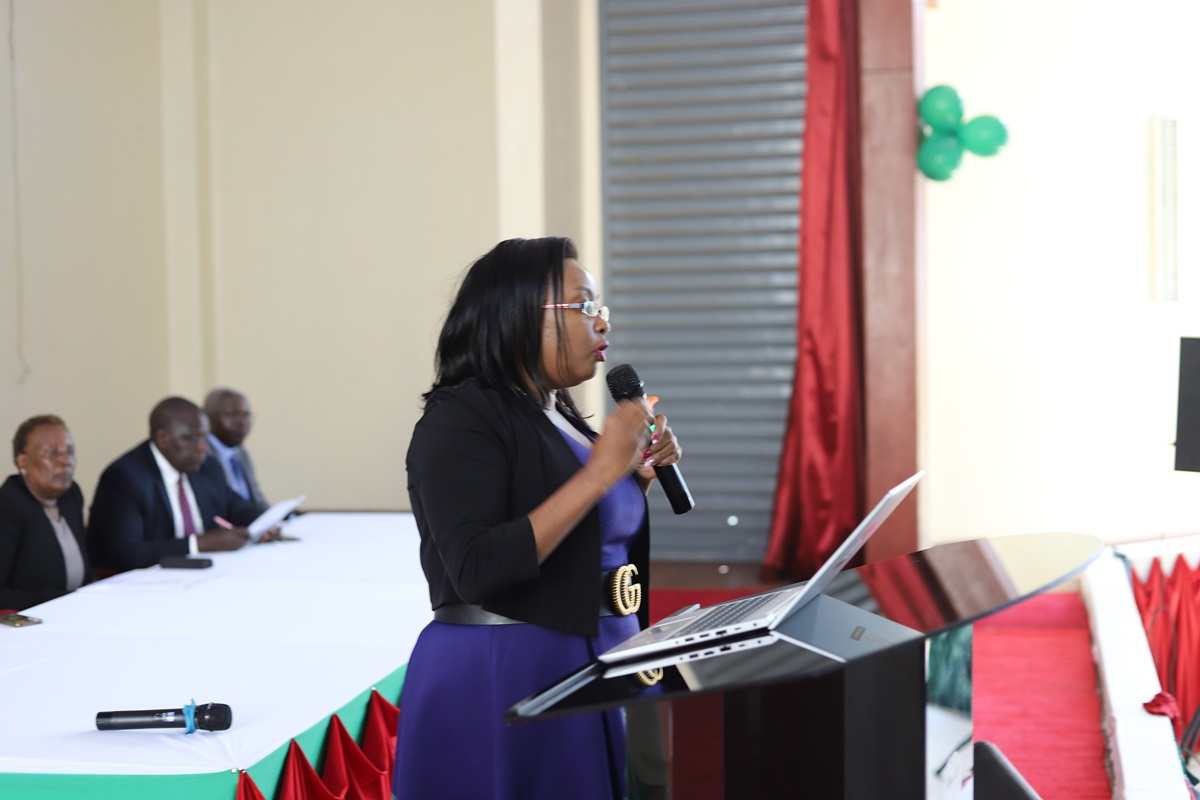
Ndambuki’s own career demonstrates the value of connecting technical expertise with practical problems. At Konza, her work involves business development, investor attraction, innovation ecosystems and the commercialisation of smart-city solutions. Egerton University recently highlighted her contribution to mobilising more than USD 650 million in investor commitments and projects, underscoring the scale at which her current work operates.
She has also been involved in initiatives aimed at strengthening digital skills and employment opportunities. At Konza, she is coordinating the delivery of the Jitume Digital Enablement Programme, which supports Kenya’s digital-skilling and jobs agenda.
For Ndambuki, innovation is not simply about producing new technology. It is about understanding people's challenges, designing solutions and creating systems through which those solutions can reach society.
That philosophy is also reflected in her work to promote innovation within Konza itself. She has championed staff innovation and collaboration, emphasising that breakthrough ideas often emerge when people with different perspectives work together to solve problems.
Building a greener future
Another important dimension of the Konza vision is sustainability. The Technopolis is being developed around principles of smart and sustainable urbanisation, with attention to renewable energy, biodiversity, tree planting, electric mobility and innovative waste-management systems. For Ndambuki, this creates another important frontier for young professionals. The green economy is no longer a peripheral field. It is increasingly intersecting with technology, construction, transport, energy, agriculture, manufacturing, research and finance.
Konza is also seeking private-sector investment in areas such as housing and infrastructure, creating opportunities for businesses and professionals beyond the traditional technology sector.
Opening doors for women and young people
Ndambuki has also built a strong interest in mentoring the next generation, particularly women and young people entering science, technology, engineering and mathematics. Her professional profile notes her involvement in programmes designed to encourage women and youth to pursue STEM careers.
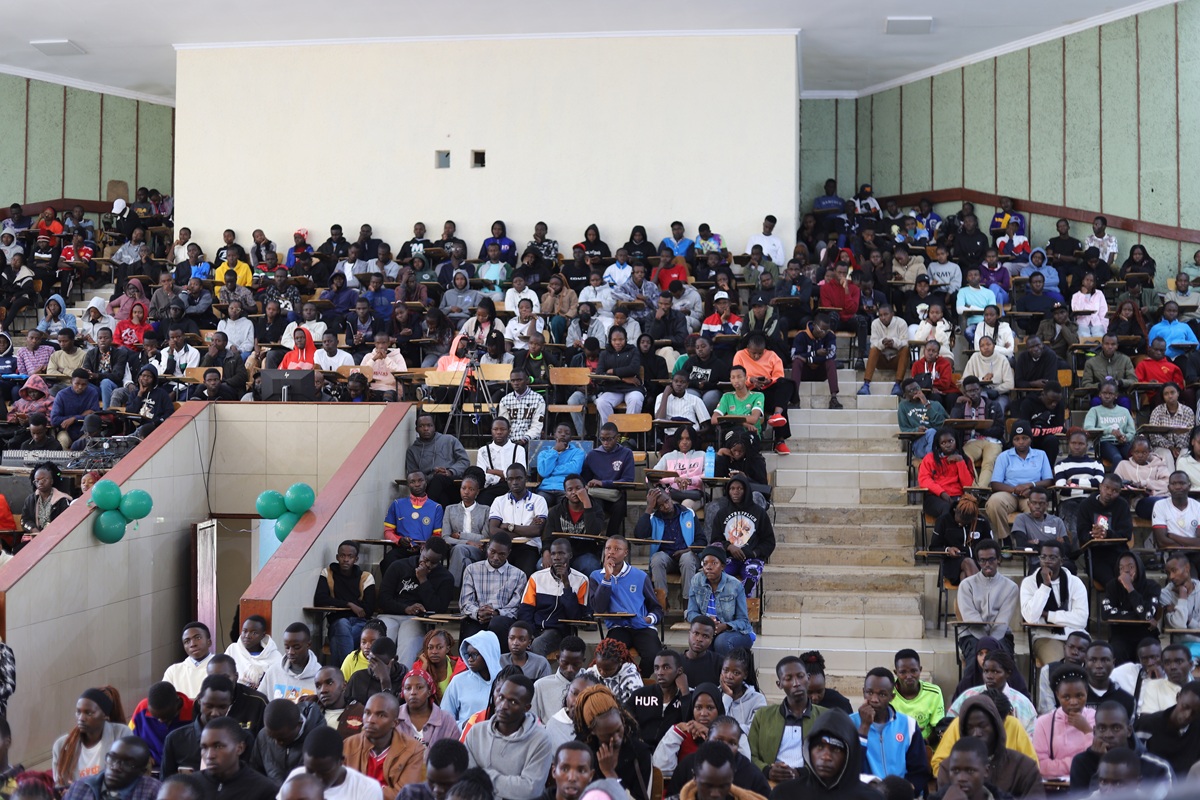
Initiatives such as Silicon Savannah Women are part of this broader effort to expand women's participation in emerging technologies, including artificial intelligence.
Her message to young women is therefore not simply to seek opportunities but to prepare themselves to create and occupy spaces where decisions about technology, innovation and economic development are being made.
The real value of an alumni network
Perhaps the most important lesson from the Alumni Connect session was Ndambuki’s interpretation of what an alumni network should be.An alumni association, she suggested, should not merely be a database of graduates. It should be a living professional ecosystem. Classmates can become collaborators. Alumni can become mentors. Former lecturers can become advisers. Professional contacts can open doors to internships, employment, research partnerships, entrepreneurship and investment.
Her own story provides a powerful example. A relationship cultivated through Rotaract at Egerton eventually helped her secure her first internship. That early opportunity became part of a much longer professional journey that moved from an internship to telecommunications, national infrastructure projects and eventually the development of one of Kenya’s most ambitious smart-city projects. The lesson is clear: relationships built early can have consequences much later.
A career is a portfolio, not a straight line
Ndambuki urged students and alumni not to define themselves solely by their current job titles.
She explained: “Jobs change. Organisations change. Technologies become obsolete. New industries emerge. What remains portable are competencies, attitudes, professional relationships, curiosity and the ability to learn.”
She encouraged participants to develop skills that can travel with them from one organisation to another and from one industry to another.
She also urged students to volunteer, participate in professional organisations, identify gaps within their communities and turn challenges into opportunities.
“For young graduates facing a competitive employment market, this is particularly relevant. Volunteering can provide experience. Student leadership can develop confidence. Professional networks can provide information. Community problems can become innovation opportunities,” Ms Ndambuki stated.
Bringing the journey back home
Ndambuki’s return to the Egerton community through Alumni Connect was therefore more than a career talk. It was a reminder of what can happen when university experiences are carried into the wider world and later brought back to inspire another generation.Her journey from Computer Science student and student leader to technology strategist, telecommunications professional and senior leader at Konza demonstrates how careers can evolve when individuals remain open to learning and relationships. It also demonstrates the potential of an alumni network to become an engine for institutional impact.
For Egerton University, the conversation opens possible areas of future collaboration with Konza Technopolis in digital skills, innovation, research and development, entrepreneurship, sustainability, technology commercialisation, mentorship and investment.
For students, it offers a practical message: ‘Do not wait for opportunity to find you. Build the skills, relationships and solutions that make you ready when opportunity arrives.’
And for alumni, Ndambuki's story is an invitation to look back at the university that helped shape them—not merely with nostalgia, but with a willingness to give back, connect and create opportunities for those coming behind. From Egerton to Konza, her story is ultimately about more than one successful career. It is about the power of education to create networks, the power of networks to create opportunities, and the power of opportunity to transform both individuals and society.